
Terracotta Hydria
Made to order
Contact Archaeopolis to arrange the quantity, dimensions, finish and production schedule for your commission.
A terracotta-coloured vessel with a rounded body, narrow neck, projecting rim and side handles. The Archaeopolis archive identifies the form as a hydria.
Historical context
In ancient Greek pottery, the hydria was a water jar, typically combining two horizontal lifting handles with a vertical handle for pouring. The Metropolitan Museum discusses the development of the type from the seventh to the third century BCE. This is typological context for a contemporary vessel.
Photographic documentation
Archaeopolis Objects archive, ceramic series, photographs 008. The images show finished contemporary pieces by collaborating workshops and artists. Handmaking can produce individual variations in surface and finish.
View the Ceramic Vessels & Tableware archive
Archaeological comparison
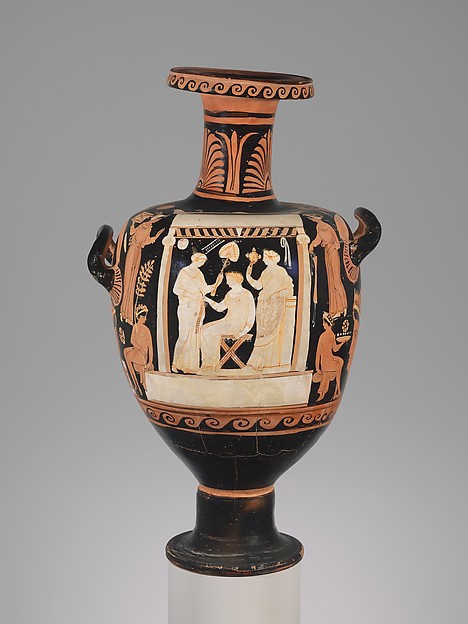
This Campanian hydria illustrates an ancient version of the water-jar family: a defined neck, a rounded body and lateral handles. Its elongated proportions, red-figure scenes and funerary imagery belong to the museum object; they are not features or a claimed prototype of our plain contemporary vessel.
MADE BY HUMAN HANDS
Every Archaeopolis object is handcrafted.
Made by people, with time, care and individual attention.